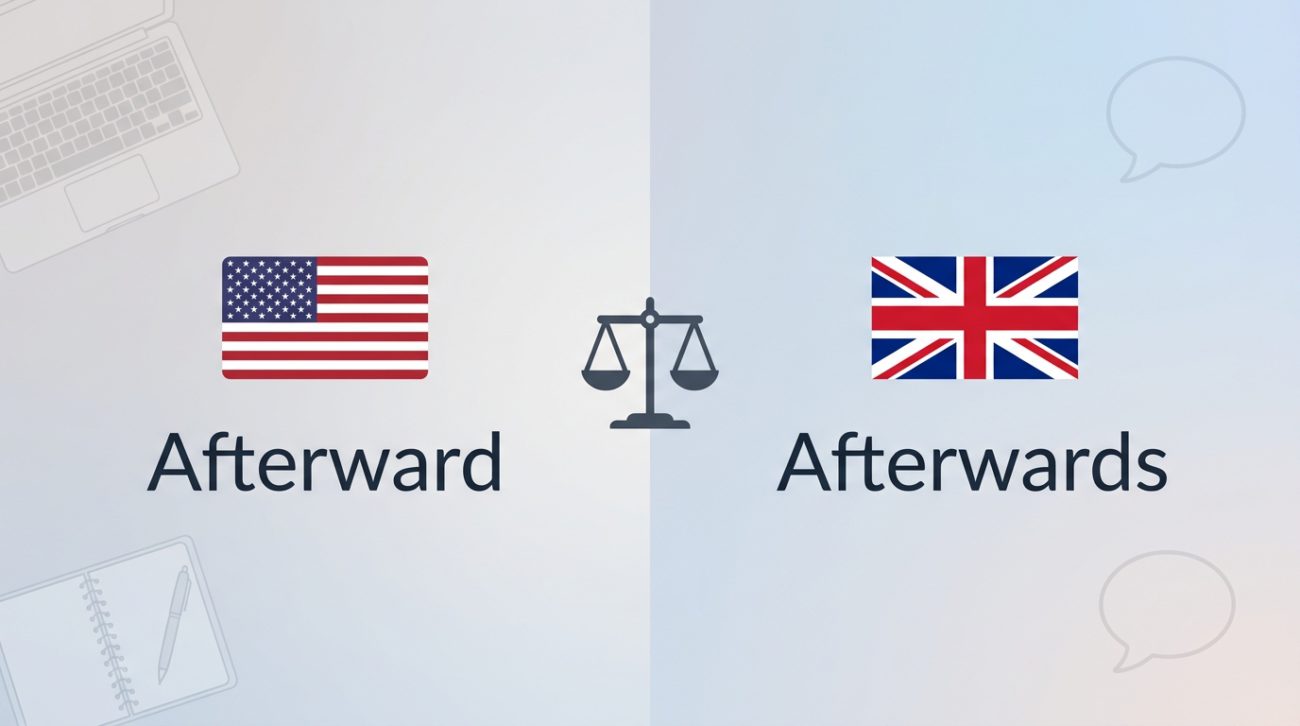
Many words in the English language look similar, which can create confusion for writers and students. One common question is afterward or afterwards which version is correct, and which sounds more natural in everyday writing? The good news is that both words are correct and widely accepted. In most situations, the choice depends on writing style, regional preference, and how the sentence flows.
Understanding Afterward Or Afterwards In Everyday Writing
The terms afterward and afterwards both refer to a time following an event. They are interchangeable and carry the same meaning. English learners often wonder why two versions exist when they mean exactly the same thing.
Both forms sound natural in everyday writing. For example, someone might say they went to dinner afterward or met friends afterwards. The meaning remains unchanged. The only difference is the spelling. This variation has existed in English for a long time, and native speakers generally understand and use both forms without confusion.
Afterward Or Afterwards And Regional English Differences
Much of the confusion surrounding afterward or afterwards comes from the differences between American and British English. American English often favors shorter forms without the extra “s.” This preference can also be seen in words such as backward and toward.
British English, however, frequently retains the ending “s.” As a result, “afterwards” appears more commonly in British newspapers, books, and everyday conversations.
Neither version is incorrect. Both are widely understood across English-speaking countries. Most writers simply choose the form that matches the style of English they already use.
Why Do Afterward Or Afterwards Both Sound Natural?
Grammar experts generally agree that there is no strict rule requiring one version over the other. Both forms have been part of the English language for centuries and continue to appear in books, articles, and online content.
Some writers prefer “afterward” because it feels shorter and more direct. This is one reason it is common in American business writing. Others feel that “afterwards” sounds slightly more conversational and relaxed.
In many cases, the choice comes down to sentence rhythm. Some sentences flow better with “afterward,” while others sound smoother with “afterwards.”
Common Uses Of Afterward Or Afterwards In Sentences
The words afterward and afterwards help explain the order of events. They show what happened next and make writing easier to follow.
For example, someone might finish work and relax afterward. Another person may attend an event and go out for dinner afterwards. In both examples, the word simply indicates that one action followed another.
Because these words connect events smoothly, they are commonly used in storytelling, articles, educational writing, and everyday conversations.
Afterward Or Afterwards In Modern Online Content
The growth of digital writing has influenced spelling preferences. Blogs, social media posts, and online articles often favor shorter words because they are quicker to read and type. This trend has contributed to the popularity of “afterward” in American online content.
At the same time, “afterwards” remains very common in British media, blogs, and personal writing. Many writers continue to prefer the longer version because it sounds more natural and conversational.
Most readers will not notice the difference unless they are specifically looking for grammar distinctions. Modern writers usually focus more on clarity and readability than on strict spelling preferences.
Choosing Between Afterward Or Afterwards
When deciding between afterward or afterwards, consistency is the most important factor. If you are writing in American English, “afterward” is usually the preferred choice. If you are writing in British English, “afterwards” may feel more natural.
Reading the sentence aloud can also help. Sometimes one version simply fits the rhythm of the sentence better than the other.
Audience expectations may also influence your choice. American readers are generally more familiar with “afterward,” while British readers often expect to see “afterwards.” Fortunately, both forms are easily understood worldwide.
Conclusion
The debate over afterward or afterwards is largely a matter of style rather than correctness. Both words are grammatically correct and can be used interchangeably in most situations. American English typically favors “afterward,” while British English more commonly uses “afterwards.” For everyday writing, the best choice depends on your audience, writing style, and consistency. As long as you use one version consistently, readers will clearly understand your meaning.