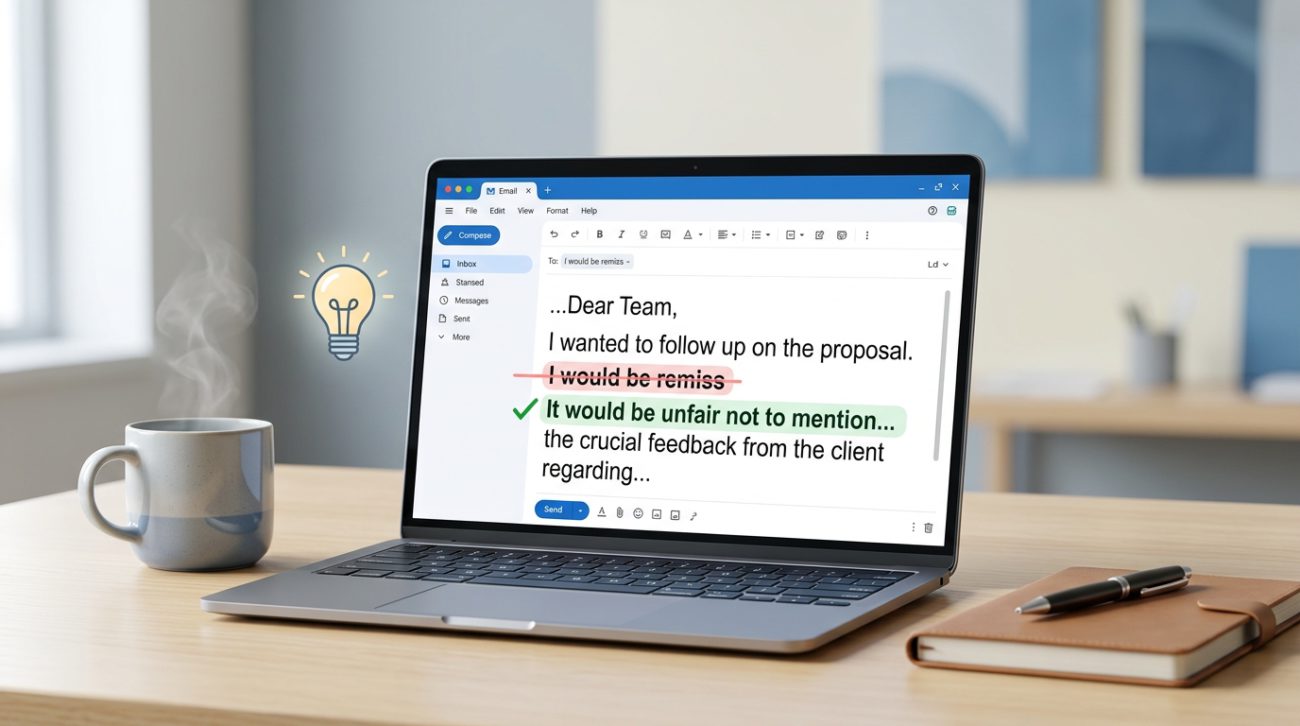
The phrase “I would be remiss” has long been used in speeches, business communication, articles, and professional writing. It helps writers acknowledge important information, express gratitude, or highlight something that should not be overlooked. However, many people search for other ways to say i would be remiss because they want alternatives that sound more natural, modern, or suited to specific situations.
Understanding alternative expressions can help improve writing variety while maintaining a professional tone.
What Does “I Would Be Remiss” Mean?
The phrase “I would be remiss” means that someone would be failing in their duty or responsibility if they did not mention something important.
For example:
“I would be remiss if I did not thank my team for their hard work.”
The speaker is emphasizing that acknowledging the team is important and should not be overlooked.
This phrase is commonly used in:
- Business presentations
- Public speeches
- Professional emails
- Academic writing
- News articles
Other Ways To Say I Would Be Remiss
Many writers look for other ways to say i would be remiss to avoid repetition and create a more natural tone.
Some common alternatives include:
- I would be overlooking an important point if…
- I would be failing to acknowledge…
- It would be unfair not to mention…
- I would be doing a disservice if…
- I would be neglecting to recognize…
- I cannot continue without mentioning…
- It is important to acknowledge…
- I would be mistaken not to point out…
- I would be failing in my responsibility if…
- It would be inappropriate not to recognize…
These alternatives communicate the same idea while offering greater flexibility in different writing situations.
Why Writers Use “I Would Be Remiss”
One reason writers continue to use this phrase is because it sounds professional and thoughtful.
Unlike simple phrases such as “I should mention,” the expression carries a stronger sense of responsibility. It signals that the information being introduced is significant.
For example:
“I would be remiss if I failed to recognize the contributions of our volunteers.”
The phrase immediately tells readers that an important acknowledgment is coming.
Other Ways To Say I Would Be Remiss In Speeches
Public speakers often look for other ways to say i would be remiss because repeating the same phrase can sound formal or outdated.
Effective alternatives include:
- Before I continue, I want to recognize…
- It is important that I acknowledge…
- I cannot move forward without thanking…
- I would like to take a moment to recognize…
- It would be unfair not to mention…
These options sound natural while maintaining a respectful and professional tone.
How Alternatives Create A More Modern Writing Style
Modern communication often favors clear and conversational language.
While “I would be remiss” remains appropriate in formal settings, many writers prefer alternatives that feel less traditional. using different expressions can make speeches, articles, and emails more engaging for modern audiences.
For example:
Instead of:
“I would be remiss if I did not mention our partners.”
You could write:
“It is important to recognize the support of our partners.”
Both communicate the same message, but the second feels more direct and contemporary.
When To Use “I Would Be Remiss”
Despite the availability of alternatives, the phrase still works well in situations that require professionalism and respect.
Common examples include:
- Award speeches
- Corporate presentations
- Formal announcements
- Academic publications
- Leadership communications
In these contexts, the phrase helps demonstrate gratitude, responsibility, and attention to important details.
Conclusion
Many professionals search for other ways to say i would be remiss because they want to diversify their writing while maintaining a polished tone. Alternatives such as “it would be unfair not to mention,” “I would be failing to acknowledge,” and “it is important to recognize” can often communicate the same idea more naturally.
While “I would be remiss” remains a valuable phrase in formal communication, using a variety of alternatives can improve readability and help writers connect more effectively with modern audiences.